Homemade Pâtes de Fruits – No Corn Syrup Recipe
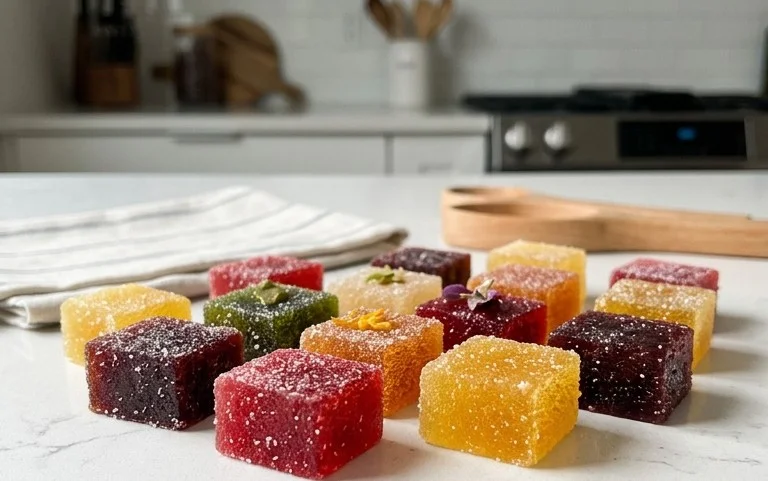
Homemade Pâtes de Fruits (no corn syrup) are a truly delightful way to capture the vibrant essence of summer in a jewel-toned confection. Have you ever bitten into one of those intensely flavored, soft fruit candies and wondered how they achieve that perfect, slightly chewy texture without being overly sweet? That magic is precisely what we’re unlocking today, and the secret lies in understanding a few key principles. Forget those mass-produced versions that often rely on corn syrup for their consistency; we’re going to create pure, unadulterated fruit goodness. The beauty of homemade pâtes de fruits is their incredible versatility. Whether you choose the sunny sweetness of apricot, the tart burst of raspberry, or the sophisticated notes of passionfruit, you’re creating edible art. These delightful morsels are more than just candy; they’re a celebration of natural flavor, a testament to simple ingredients transformed into something extraordinary. Get ready to impress yourself and your loved ones with these exquisite, homemade pâtes de fruits (no corn syrup) that taste like sunshine itself!
Homemade Pâtes de Fruits (No Corn Syrup)
There’s something incredibly satisfying about making your own candy. Pâtes de fruits, those jewel-like fruit jellies, are no exception. They offer a burst of pure fruit flavor with a delightful chewy texture, and the best part? You can absolutely achieve this without relying on corn syrup! My go-to recipe uses just a few simple ingredients to create these beautiful and delicious treats. They’re perfect for gifting, sharing, or simply enjoying with a cup of tea.
Ingredients:
*Note on Pectin: For this recipe, it’s important to use “classic” or “traditional” pectin, often labeled as “fruit pectin” or “powdered fruit pectin.” Avoid “low-sugar” or “no-sugar-needed” pectins, as these are formulated differently and won’t produce the desired texture with granulated sugar.
Cooking Instructions
This process is quite straightforward, but it requires a bit of attention to detail. The key is understanding how the pectin works and ensuring it’s properly activated.
Phase 1: Preparing the Fruit Base
1. First, gather your fruit juice. I love using a combination of flavors to create a more complex taste profile and a beautiful layered color. For this batch, I opted for half orange juice and half pomegranate juice. You can experiment with any fruit juice you enjoy – cranberry, apple, raspberry, or even a tropical blend. Make sure your juice is 100% fruit juice with no added sugars or thickeners, as this can interfere with the pectin’s ability to set. Pour the 2 cups of fruit juice into a medium-sized, heavy-bottomed saucepan. Using a heavier pan helps to distribute heat evenly, preventing scorching.
2. In a separate small bowl, combine your granulated sugar and the 3 tablespoons of classic pectin. Whisk these together thoroughly. This is a crucial step! Mixing the pectin with the sugar beforehand helps to prevent the pectin from clumping when it’s added to the hot liquid. Pectin needs to be dispersed evenly within the sugar before it encounters the heat and acid of the fruit juice to ensure it activates correctly and creates a smooth, uniform set. If you just dumped the pectin straight into the juice, you’d likely end up with little lumps of undissolved pectin throughout your pâtes de fruits.
Phase 2: Cooking and Setting
3. Now, add the lemon juice to the fruit juice in the saucepan. The acidity from the lemon juice is important for activating the pectin. Place the saucepan over medium heat. Stirring constantly, gradually add the pectin-sugar mixture to the fruit juice. Continue to stir and bring the mixture to a rolling boil. A rolling boil is a boil that cannot be stirred down – it bubbles vigorously all over the surface. You must maintain this rolling boil for at least one minute. This vigorous boiling is what truly activates the pectin and ensures it will set properly. Don’t be tempted to reduce the heat too soon or you’ll risk your pâtes de fruits not setting firm enough. Keep a close eye on it and stir continuously to prevent any sticking or burning.
4. Once the mixture has reached a rolling boil and you’ve maintained it for a full minute, remove the saucepan from the heat. Let it sit for about 5 minutes to allow any excess foam to subside. You’ll notice the mixture will thicken slightly. This is a good sign that the pectin is starting to do its work. While it’s still hot, carefully pour the mixture into your prepared mold. You can use a lightly oiled 8×8 inch baking pan, a silicone mold, or even small individual candy molds. If you’re using a baking pan, line it with parchment paper, leaving some overhang on the sides to make it easier to lift out the set jelly later. Ensure the surface of the pour is as even as possible to create uniform thickness in your pâtes de fruits.
Phase 3: Cooling and Finishing
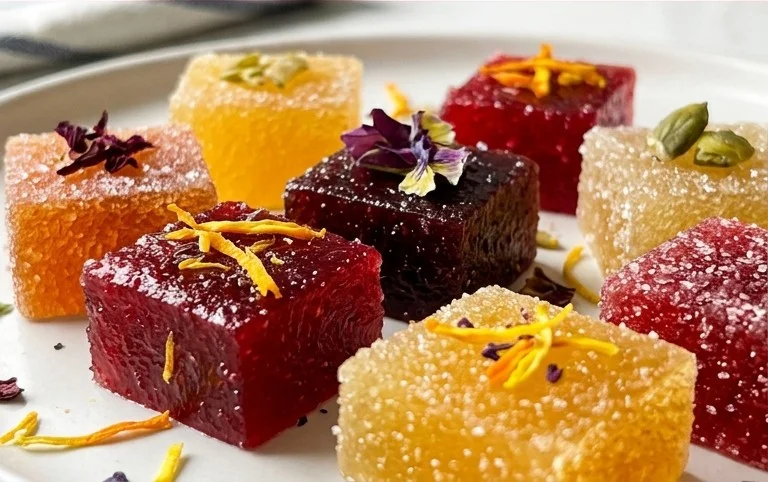
5. Allow the poured mixture to cool at room temperature for about 1 hour, then transfer it to the refrigerator. It needs to chill and set completely, which typically takes at least 4 hours, but I often leave it overnight to be absolutely sure. The jelly will become firm and slightly springy to the touch. Once fully set, carefully lift the entire slab out of the baking pan using the parchment paper overhang, or unmold the individual pieces from your silicone molds. Trim any uneven edges if necessary. Then, cut the jelly into your desired shapes – small squares are traditional, but you can get creative with cookie cutters for a festive touch. Finally, toss each piece generously in granulated sugar until fully coated. This sugar coating not only adds a delightful texture but also helps to prevent the pieces from sticking to each other. Store your homemade pâtes de fruits in an airtight container at room temperature for up to a week. Enjoy these little bursts of fruity goodness!
Conclusion:
Making your own homemade pâtes de fruits without corn syrup is a truly rewarding experience. This recipe offers a delightful way to enjoy intensely fruity, chewy candies with a clean, natural flavor. The absence of corn syrup means you’re savoring the pure taste of your chosen fruits, enhanced by simple sugar and pectin for that perfect tender-set texture. It’s a much healthier and more satisfying alternative to store-bought versions laden with artificial ingredients.
These vibrant gems are incredibly versatile. Enjoy them as a sophisticated post-dinner treat, a delightful addition to a cheese board, or even incorporated into desserts like parfaits or as a colorful garnish for cakes. For variations, don’t be afraid to experiment! Try blending different fruit combinations like strawberry-rhubarb, mango-passionfruit, or even adding a hint of spice with gin extractger or chili. The possibilities are truly endless, allowing you to tailor these homemade pâtes de fruits to your exact preferences. I truly encourage you to give this recipe a try; you’ll be amazed at how simple and delicious homemade fruit candies can be!
Frequently Asked Questions:
Why is this recipe better than using corn syrup?
This recipe’s key advantage lies in its avoidance of corn syrup, which is often used in commercial pâtes de fruits to prevent crystallization and achieve a smooth texture. By omitting corn syrup, you’re ensuring a cleaner, more natural fruit flavor shines through. This version relies on the natural properties of sugar and pectin to achieve the desired consistency, resulting in a more wholesome and authentic taste experience.
What is the best way to store my homemade pâtes de fruits?
To maintain the perfect texture and freshness of your homemade pâtes de fruits, it’s best to store them in an airtight container at room temperature. You can place parchment paper between layers to prevent sticking. They should stay delicious for at least a week, though their vibrant flavor is often best enjoyed within the first few days. Avoid refrigerating them, as this can sometimes make them too hard.
My pâtes de fruits are too soft or too hard. How can I adjust?
Texture issues often stem from the sugar-to-pectin ratio or the cooking temperature. If they are too soft, you might need to cook the mixture slightly longer next time to reach a higher temperature (around 230-240°F or 110-116°C). If they are too hard, it might mean you cooked them a little too long or used too much pectin for the amount of liquid. Carefully recalibrating your cooking time and ensuring accurate measurements will help achieve that ideal chewy, tender bite.
Homemade Pâtes de Fruits (no corn syrup)
A delicious and natural recipe for fruit jellies made without corn syrup, using fresh fruit juice and pectin.
Ingredients
-
2 cups fruit juice (orange and pomegranate)
-
1 cup granulated sugar
-
1 cup granulated sugar, plus more for coating
-
3 tablespoons classic pectin
-
1 tablespoon freshly squeezed lemon juice
Instructions
-
Step 1
Combine fruit juice and 1 cup of sugar in a saucepan. -
Step 2
In a separate small bowl, whisk together the pectin and the remaining 1 cup of sugar. -
Step 3
Bring the fruit juice mixture to a boil over medium heat, stirring constantly. -
Step 4
Gradually whisk the pectin-sugar mixture into the boiling fruit juice. Continue to boil for 1 minute, stirring continuously. -
Step 5
Remove from heat and stir in the lemon juice. -
Step 6
Pour the mixture into a parchment-lined 8×8 inch baking dish. Let it set at room temperature for at least 4 hours, or until firm. -
Step 7
Cut into desired shapes and toss each piece generously in granulated sugar to coat.
Important Information
Nutrition Facts (Per Serving)
It is important to consider this information as approximate and not to use it as definitive health advice.
Allergy Information
Please check ingredients for potential allergens and consult a health professional if in doubt.